
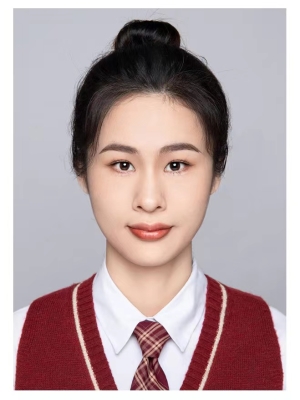
姓名:刘柳宜
职称:副教授
导师类型:博士生导师
电子邮件:liuly233@mail.sysu.edu.cn
学科方向:
071010-生物化学与分子生物学
071009-细胞生物学
个人简介
刘柳宜,中山大学生命科学学院副教授,博士生导师,中山大学逸仙学者计划“新锐学者”。长期致力于分子药物的开发、作用机制解析以及生物医学应用。以(共)第一作者或(共)通讯作者身份,在 J. Am. Chem. Soc.、Angew. Chem. Int. Ed.、Natl. Sci. Rev.、Sci. Adv.、Adv. Sci.、J. Med. Chem.、Cell Rep. 等杂志发表系列研究论文,其中,ESI高被引论文1篇。
研究方向
(1)分子药物的开发与生物医学应用:致力于新型分子药物开发,解析分子药物对肿瘤微环境的调控机制,并发展抗肿瘤免疫治疗新策略。
(2)核酸二级结构的识别与功能调控:针对特定核酸二级结构的空间构象,发展高选择性化学生物学工具,实现对目标核酸结构的精准识别与功能调控。
个人经历
2025.05-至今:中山大学生命科学学院,副教授
2022.09-2025.04:南京大学化学化工学院,博士后 (合作导师:郭子建院士)
2017.09-2022.06:中山大学化学学院,博士 (导师:毛宗万教授)
2013.09-2017.06:中山大学化学学院,学士
承担课题
国家自然科学基金联合基金项目,2026-2029,参与
广东省基础与应用基础研究重大项目,2025-2030,参与
中山大学引进人才计划,2025-2028,主持
国家自然科学基金青年项目(C类),2024-2025,主持
博士后创新人才支持计划,2023-2025,主持
江苏省卓越博士后计划,2023-2025,主持
中国博士后科学基金会面上项目,2023-2025,主持
主要论文专著
#为共同第一作者,*为通讯作者
Liu, L.-Y.#; Yu, W.#; Liu, Y.; Yang, Y.; Wei, Q.; Zhao, Z.; Yang, R.; Li, J. P.*; Guo, Z.*, Uncoupling tumor immunogenicity from cell death with platinum(IV)-antibody conjugates. Natl. Sci. Rev. 2026, nwag202.
Liu, L.-Y.# *; Li, J. #; Sun, P. #; Yu, W.; Ma, T.-Z.; Zeng, Y.-L.; Zhao, Z.; Wei, Q.; Liu, Y.; Li, J. P.; Mao, Z.-W.*; Guo, Z.*, Photoactivated Ruthenium–Platinum Complex Enhances Immune Checkpoint Blockade Therapy by Upregulating MHC‑I Expression and Inducing Immunogenic Cell Death. J. Med. Chem. 2026, 69, 4629-4641
Shao, C.#; Li, M.#; Liu, L.-Y.#; Bai, D.; Yang, J.; Liu, C.; Cai, L.; Wang, X.; Peng, J.; Guo, Z.*; Yi, C.*, Pt-seq unveils the genomic binding pattern of platinum-based drugs. Sci. Adv. 2025, 11 (44), eadx6809.
Zeng, Y.-L.; Liu, L.-Y.*; Ma, T.-Z.; Liu, Y.; Liu, B.; Liu, W.; Shen Q.-H.; Wu C.*; Mao, Z.-W.*, Iridium(III) Photosensitizers Induce Simultaneous Pyroptosis and Ferroptosis for Multi-Network Synergistic Tumor Immunotherapy. Angew. Chem. Int. Ed. 2024, 63, e202410803.
Liu, L.-Y.; Ma, T.-Z.; Zeng, Y.-L.; Liu, W.; Zhang, H.; Mao, Z.-W.* Organic-Platinum Hybrids for Covalent Binding of G-Quadruplexes: Structural Basis and Application to Cancer Immunotherapy. Angew. Chem. Int. Ed. 2023, 62, e202305645.
Chen, Q.# *; Liu, L.-Y.#; Tian, Z.#; Fang, Z.#; Wang, K.-N.; Shao, X.; Zhang, C.; Zou, W.; Rowan, F.; Qiu, K.; Ji, B.; Guan, J.-L.; Li, D. *; Mao, Z.-W.*; Diao, J.* Mitochondrial nucleoid condensates drive peripheral fission through high membrane curvature, Cell Rep. 2023, 42, 113472.
Liu, L.-Y.; Ma, T.-Z.; Zeng, Y.-L.; Liu, W.*; Mao, Z.-W.* Structural Basis of Pyridostatin and Its Derivatives Specifically Binding to G-Quadruplexes. J. Am. Chem. Soc. 2022, 144, 11878–11887.
Liu, L.-Y.;Wang, K.-N.; Liu, W.*; Zeng, Y.-L.; Hou, M.-X.; Yang, J.; Mao, Z.-W.* Spatial Matching Selectivity and Solution Structure of Organic-Metal Hybrid to Quadruplex-Duplex Hybrid. Angew. Chem. Int. Ed. 2021, 60, 20833 -20839.
Wang, K.-N.#; Liu, L.-Y.#; Mao, D.; Xu, S.; Tan, C.-P.; Cao, Q.; Mao, Z.-W.*; Liu, B.* A Polarity-Sensitive Ratiometric Fluorescence Probe for Monitoring Changes in Lipid Droplets and Nucleus during Ferroptosis. Angew. Chem. Int. Ed. 2021, 60, 15095-15100.
Wang, K.-N.#; Liu, L.-Y.#; Qi, G.; Chao, X.-J.; Ma, W.; Yu, Z.*; Pan, Q.; Mao, Z.-W.*; Liu, B.*; Light-Driven Cascade Mitochondria-to-Nucleus Photosensitization in Cancer Cell Ablation. Adv. Sci. 2021, 2004379.
Wang, K.-N.#, Shao, X.#; Tian, Z.#; Liu, L.-Y.#; Zhang, C.#; Tan, C.-P.; Zhang, J.; Ling, P.; Liu, F.; Chen, Q.*; Diao, J.*; Mao, Z.-W.* A Continuous Add-On Probe Reveals the Nonlinear Enlargement of Mitochondria in Light-Activated Oncosis. Adv. Sci. 2021, 2004566.
Liu, L.-Y.#; Fang, H.#; Chen, Q.#; Chan, M. H.-Y.#; Ng, M.; Wang, K.-N.; Liu, W.; Tian, Z.; Diao, J.*; Mao, Z.-W.*; Yam, V. W.-W.* Multiple-Color Platinum Complex with Super-Large Stokes Shift for Super-Resolution Imaging of Autolysosome Escape. Angew. Chem. Int. Ed. 2020, 59, 19229-19236.
Liu, L.-Y.#; Liu, W.#; Wang, K.-N.; Zhu, B.-C.; Xia, X.-Y.; Ji, L.-N.; Mao, Z.-W.*Quantitative Detection of G-Quadruplex DNA in Live Cells Based on Photon Counts and Complex Structure Discrimination. Angew. Chem. Int. Ed. 2020,59, 9719-9726.
长期招聘信息
研究生招生:本实验室倡导创新,鼓励勇于探索的科研精神,欢迎有浓厚兴趣的同学加入。
博士后招聘:在化学生物学、分子生物学、细胞生物学等相关专业已获得或即将获得博士学位,具备分子药物开发或者抗肿瘤免疫治疗等相关领域的研究经验,富有创新精神和开拓能力。
欢迎本科生到课题组开展科研训练或者做毕业设计,支持独立开展课题与发表论文

